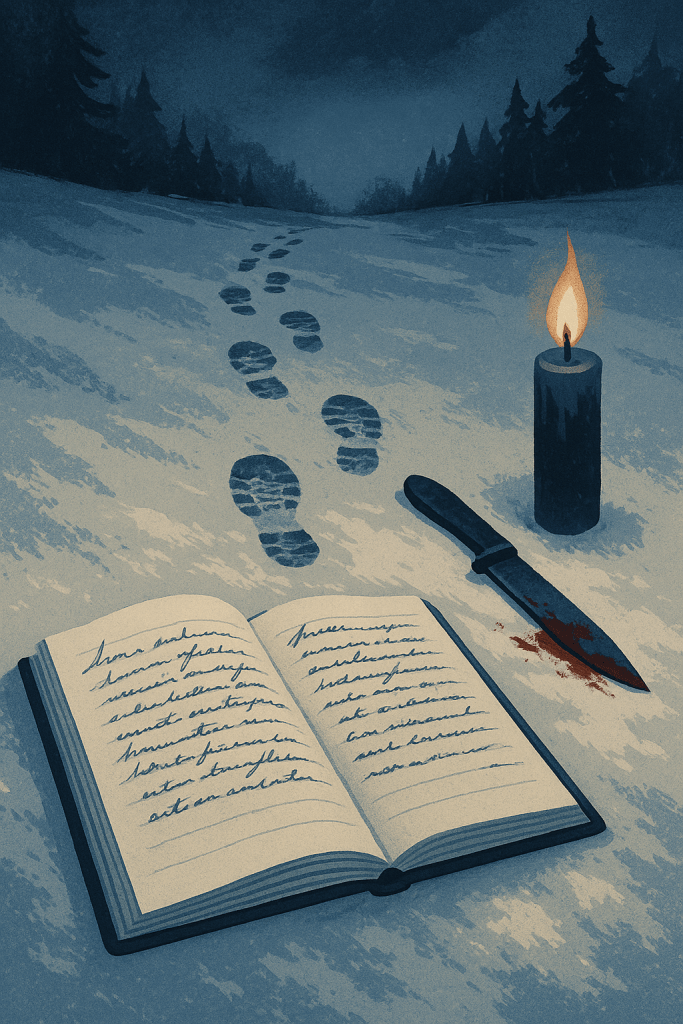
What do an almost-governor, a novel, and a body have in common? In Colorado, the answer was Steven Pankey.
In 1984, twelve-year-old Jonelle Matthews disappeared after a school Christmas concert. Her face became one of the first missing children to appear on milk cartons, haunting households across America. For decades, her case went unsolved—until pipeline workers unearthed her body in 2019.
But long before her remains were found, Pankey had already written himself into the story. The failed political candidate sent letters and gave interviews, even revealing a chilling detail investigators had never shared: someone had raked the snow outside Jonelle’s home to obscure footprints. It was the kind of secret only the killer could have known.
In 2022, Pankey was convicted of felony murder and kidnapping. Not because of DNA or fingerprints—but because of his words.
And he isn’t the only one. Around the world, other killers have blurred the line between fiction and confession:
- Krystian Bala’s novel Amok mirrored a real murder in Poland.
- Mark Twitchell wrote a screenplay about luring a man to a garage, then acted it out.
- Jack Unterweger became a literary star while secretly strangling women.
Their stories raise a haunting question: why do killers write? Is it arrogance, confession, or a compulsion to be seen?
👉 I dig into this disturbing intersection of crime and storytelling in my latest newsletter. Read the full piece here:
🔗 The Snow Tracks Murder: A Secret Buried in Words
 Author KL Adams
Leave a comment