On a quiet farm in Adams, Tennessee, the line between folklore and fear vanished forever.
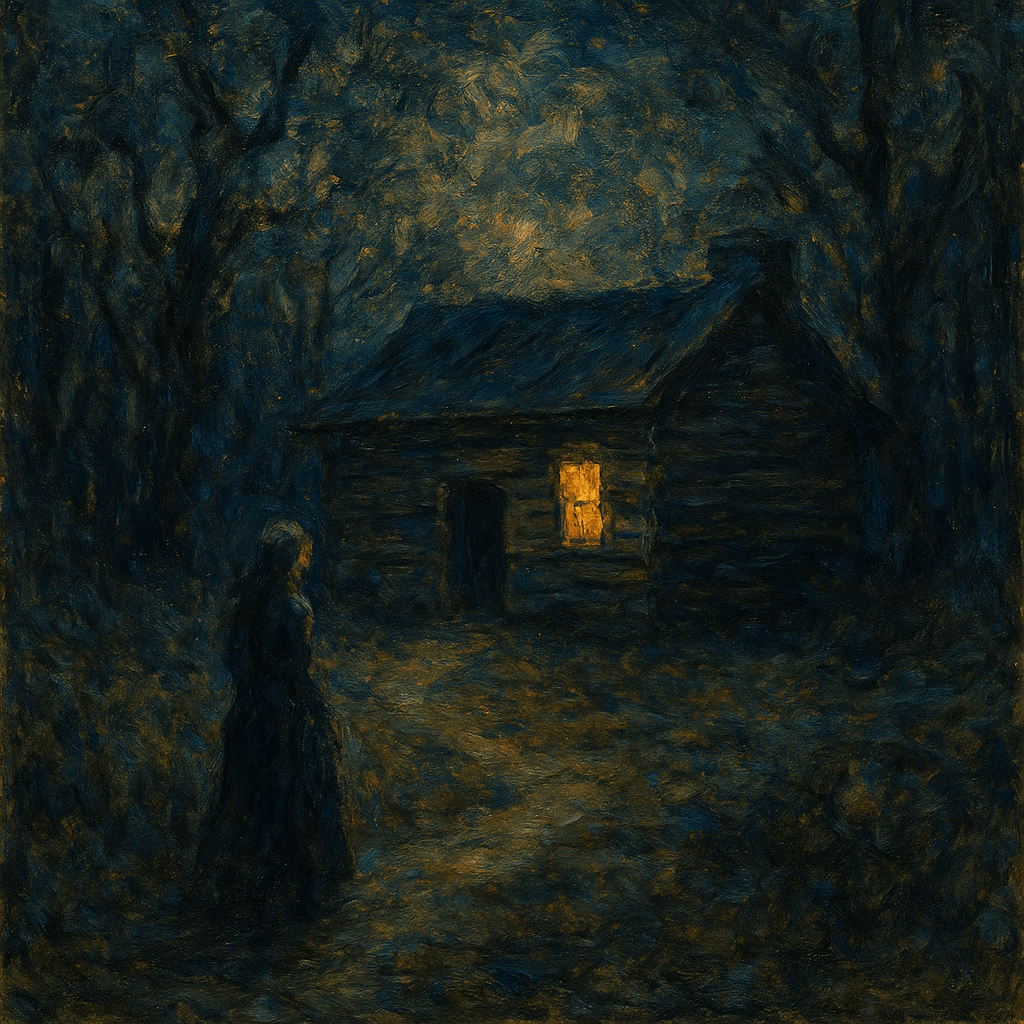
It begins, as these things often do, with a house that should have been ordinary. In 1817, farmer John Bell moved his family to the Red River settlement, now known as Adams, Tennessee. The land was fertile, the fields wide, and life seemed good—until the knocking started.
According to John’s son Richard Williams Bell, who later wrote the manuscript Our Family Trouble, the family first heard faint raps on the walls and chains dragging across the floorboards at night. Soon came the scratching sounds, the heavy footsteps in the hallway, and whispers too faint to catch.
The youngest daughter, Betsy Bell, suffered the worst of it. Richard remembered her waking in terror, her hair pulled by invisible hands, her face slapped until welts bloomed across her skin. Martin Ingram’s 1894 book, An Authenticated History of the Bell Witch, expanded these accounts, describing how Betsy was pinched, choked, and tormented until the family feared for her life.
The Witch Finds Its Voice
At first it rasped and hissed from beneath the floor, but soon the spirit spoke clearly. It mocked neighbors, quoted scripture, and argued theology. Ingram claimed the entity could mimic voices so perfectly that visitors swore they heard their own words thrown back at them. Ministers prayed, but the voice jeered, twisting scripture into taunts.
This was no ordinary haunting—it was a presence the family would come to call the Bell Witch.
Death of John Bell
By 1820, the haunting turned deadly. John Bell Sr. grew mysteriously ill—his tongue swelling, his limbs failing. Richard Bell recalled finding a strange vial of black liquid near his father’s bed. According to Ingram’s account, the entity laughed and declared it had poisoned him.
On December 20, 1820, John Bell died. At his funeral, neighbors swore they heard the spirit singing a mocking drinking song. Ingram preserved this tale in his book, making it one of the few American hauntings where a spirit was said to cause a man’s death.
The Legend Lives On
The disturbances waned after John’s death, but the legend did not. Richard Bell’s Our Family Trouble and Ingram’s An Authenticated History of the Bell Witch gave the story permanence. Modern accounts, like those preserved by the Tennessee State Museum, keep the tale alive today.
The original Bell family cabin is gone, but the Bell Witch Cave—a 490-foot cavern on land once owned by the Bells—draws visitors every year. A replica of the log home stands nearby, offering tours and eerie retellings. Some guests still swear they hear whispers in the cave or feel icy hands brush their shoulders in the dark.
The Bell Witch in Pop Culture
The story has inspired countless works of fiction and film. Brent Monahan’s novel The Bell Witch: An American Haunting reimagined the legend for modern readers, and it became the basis for the 2005 film An American Haunting, starring Donald Sutherland and Sissy Spacek.
Other adaptations include Bell Witch: The Movie (2007) and The Bell Witch Haunting (2013), each offering their own take on the tale. The Witch has been reprinted, reinvented, and reshaped, proving that a story first whispered on a Tennessee farm can still terrify new generations.
Summary
The Bell Witch legend began as a frontier haunting but has endured as one of America’s most infamous ghost stories. What started with knocks and whispers escalated into violent assaults, a talking spirit, and the death of John Bell himself.
Today, the tale lives on in books, films, tourism, and folklore. The Witch may have vanished from Adams, Tennessee in 1821, but her whispers still echo across American culture.
👉 Read the full story, with sources and a deep dive into the legend, over on my Substack:
The Ink Plot – The Bell Witch Haunting: The Farm Where Shadows Spoke
 Author KL Adams
Leave a comment