
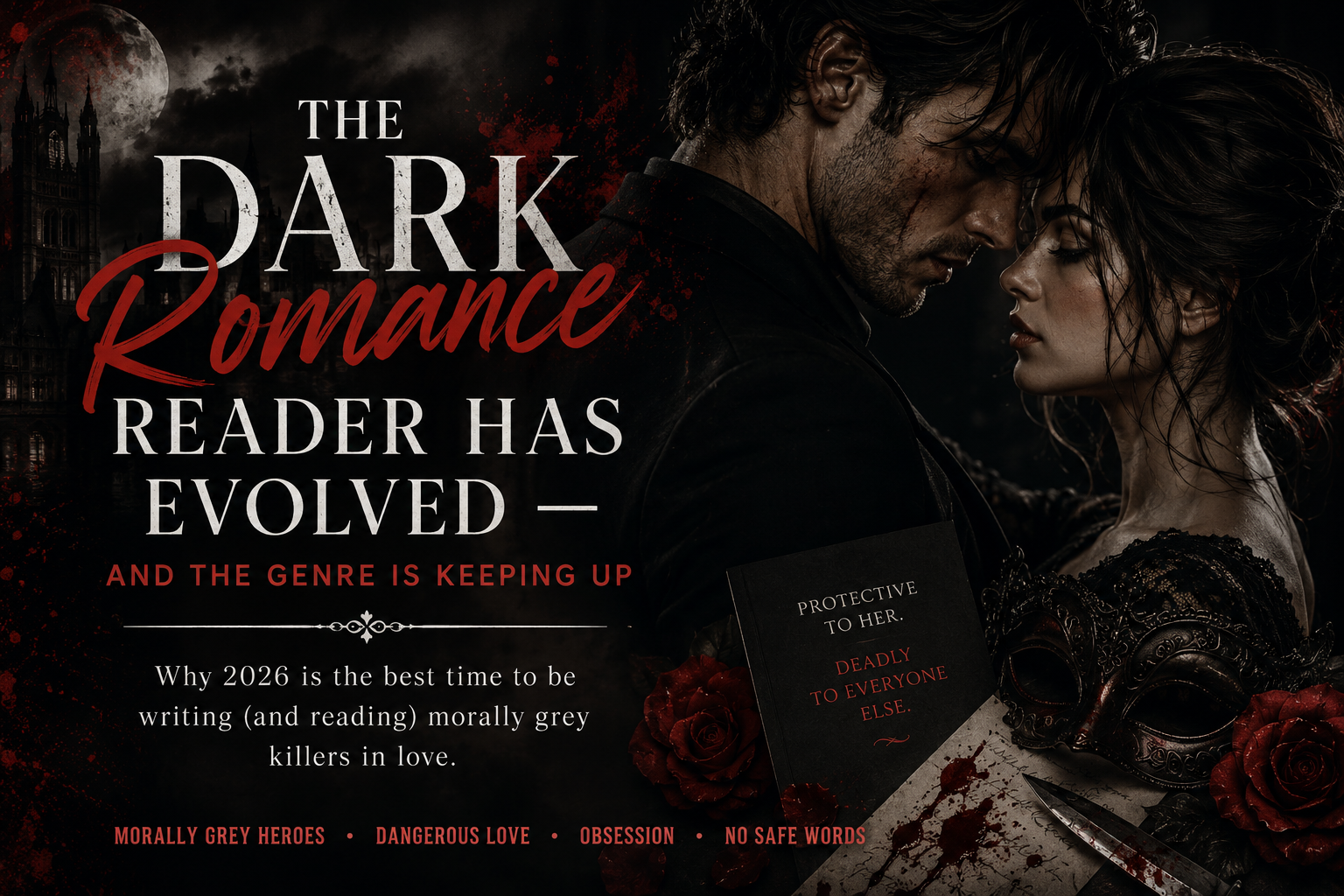
If you’ve been paying attention to the romance genre lately, you already know something has shifted.

We’re not talking about brooding billionaires or grumpy professors anymore. Dark romance in 2026 has entered a new era — one that’s bolder, sharper, and far more psychologically complex than anything the genre has seen before.
And honestly? It’s about time.
What the Numbers Are Saying
The data on reader appetite right now is striking. Across BookTok, Goodreads, and bestseller lists, the titles gaining the most traction share a very specific DNA: morally grey anti-heroes who are dangerous to everyone except her, dual POV structures that pull readers uncomfortably close to darkness, and heroines who are anything but passive.
Serial killer romance — once considered too niche, too much — is now one of the genre’s fastest-growing subgenres. Gothic-slasher romance is surging. The “protective killer” trope has gone from underground favorite to mainstream obsession.
Readers aren’t just tolerating the darkness. They’re demanding it go further.
What’s Actually Driving This
Dark romance works because it offers something literary fiction rarely does — a safe container for extreme emotion. Readers get to explore danger, obsession, and moral complexity without real-world consequences. The tension between who a character is and who he becomes for her is endlessly compelling.
But 2026’s readers are more sophisticated than ever. They know their tropes. They know their conventions. They can spot a fudged consent thread from a mile away, and they will absolutely call it out. The genre has grown up, and the writers who are thriving are the ones treating their readers as the intelligent, discerning audience they are.
The best dark romance right now doesn’t just shock. It haunts.
Where Talking to Strangers Lives in This Moment
When I wrote Talking to Strangers, I was drawn to a specific question: what happens when the most dangerous person in the room decides to protect you instead of destroy you?
Ryder is not a redemption arc. He’s not learning to be good. He’s a killer — and he knows exactly what he is. What changes is where he directs that darkness. When Gabby finds herself facing double homicide charges for crimes she didn’t commit, Ryder becomes the only person with both the motive and the means to pull her out.
That’s the tension the book lives in. Not will he hurt her — but what will he do to everyone else to keep her safe?
Dual POV lets the reader inside both minds. Gabby’s fear, her reluctant trust, her growing understanding of who she’s dealing with. Ryder’s cold precision slowly cracking open around one person he can’t walk away from. Two voices, one collision course.
That’s exactly the structure dark romance readers are responding to most right now. And if you’ve been sleeping on Talking to Strangers, this is your sign.
The Genre Isn’t Getting Darker for Shock Value
The best writers in this space — H.D. Carlton, Brynne Weaver, Navessa Allen — aren’t dark for darkness’s sake. The darkness is in service of something emotionally true. A story about control and surrender. About what it means to be truly seen by someone the world would call a monster.
That’s the story I wanted to tell. And if 2026 is any indication, readers are very ready to hear it.
Talking to Strangers is available now. If you know, you know.
KL Adams is a literary blogger and fiction writer specializing in dark fantasy, vampire fiction, and paranormal romance. Follow on WordPress, Inkitt, and Wattpad for reviews, reading lists, and stories that haunt you long after the last page.
Check out my Gumroad course.
Leave a Reply